The Miqaat boundary for the pilgrims travelling from outside Makka, intending to perform Hajj or Umrah pilgrimage must enter the state of Ehram before crossing into. This involves performing ritual cleaning and wearing prescribed clothing.
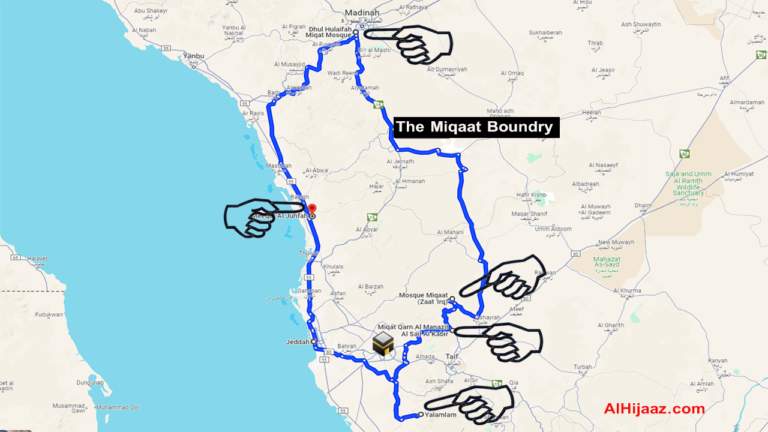
There are five Miqaats (places to wear the unsewed white set of cloths- known as Ehraam and make intension of Umra or Hajj) which surround Macca tu Mukarrama. Four of them were established by the Prophet (ﷺ), the other by Umar (رضي الله عنه) during his Caliphate.
Abdullah bin Abbas (رضي الله عنه) said, “The Messenger of Allah designated Dhul Hulaifah as the Miqat for the people of Al-Madinah, Al-Johfa for the people of Ash-Sham, Qarn for the people of Najd, and Yalamlam for the people of Yemen.” [Bukhari]
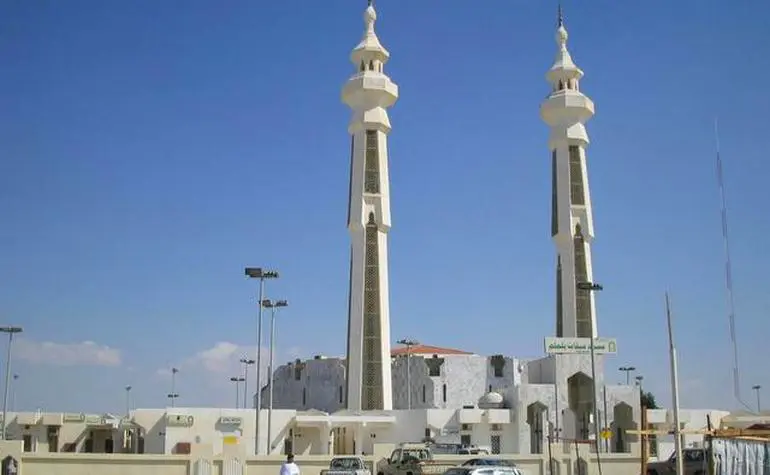
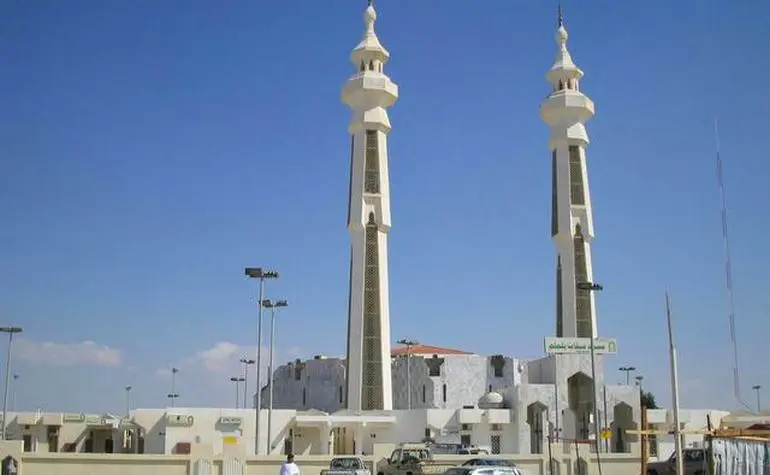
The Dhul Hulaifah Miqat
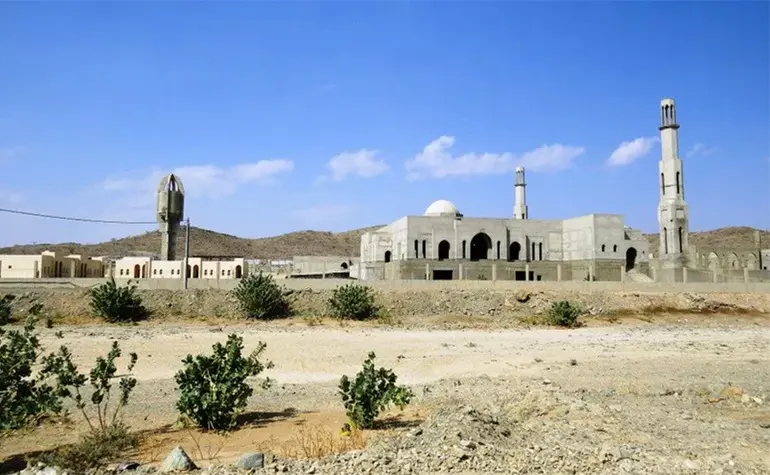
The Dhat Irq Miqat
The Qarn al-Manazil Miqat
The Yalamlam Miqat
The Al-Johfa Miqat
Understanding the Sacred Boundaries for Pilgrims
In the heart of every Muslim lies a deep-rooted desire to undertake the sacred journey to Makkah, known as Hajj, at least once in their lifetime. This spiritual journey is not just a physical undertaking but also a manifestation of deep religious symbolism and adherence to Islamic tenets. Central to the commencement of this holy pilgrimage is the concept of Miqaat – the designated points or stations at which pilgrims must prepare themselves both physically and spiritually before entering the sacred precincts of Makkah. In this article, we will explore the significance of these Miqaat places around Makkah and their role in the pilgrimage.
The Concept of Miqaat
Miqaat, in Islamic tradition, refers to the appointed places and times at which pilgrims intending to perform Hajj or Umrah must don their Ihram, the state of ritual consecration. Ihram, symbolized by two unsewn white cloths for men and modest attire for women, marks the pilgrim’s entry into a state of sanctity and purity. The act of wearing Ihram at Miqat is a reminder that all pilgrims are equal before Allah, irrespective of their social or economic status.
The Five Miqaat Stations
Dhu’l-Hulayfah (Bir Ali) – For Pilgrims from Medina: Located about 9 kilometers from Medina, Dhu’l-Hulayfah is the Miqat for pilgrims coming from the direction of Medina. This place has a special significance as it was the Miqat for the Prophet Muhammad (peace be upon him) himself.
.Juhfah – For Pilgrims from the West: Historically, Juhfah, near Rabigh, was the Miqat for pilgrims coming from or through Syria and Egypt. Due to its historical ruins, most pilgrims now stop at Rabigh.
Qarn al-Manazil (Ta’lim) – For Pilgrims from the East: This Miqat is located near Ta’lim, a town in the east. It serves as the Miqat for pilgrims coming from countries like the UAE, Malaysia, and Pakistan
Dhat Irq – For Pilgrims from Iraq/Iran: This station is for pilgrims traveling from the direction of Iraq and Iran
Yalamlam – For Pilgrims from the South: Yalamlam is a Miqat for pilgrims coming from the southern regions, including Yemen and parts of Africa
.Spiritual Significance of Miqaat
The Miqaat zones serve as spiritual gateways into the sacred journey of Hajj and Umrah. When a pilgrim dons the Ihram at these points, they symbolically leave behind their worldly concerns and adorn a garb of piety and simplicity. This transition marks a physical and spiritual cleansing, preparing the pilgrim to enter the holy city with humility and devotion.
The Miqat stations are not merely geographical markers but pivotal points where the transformation of a believer into a pilgrim occurs. They remind us of the universal equality of humankind, the transient nature of life, and the return to the essence of one’s being. As pilgrims cross these points, they step into a state of Ihram, not just in attire but in spirit, reinforcing their commitment to the service of Allah and the values of Islam. This profound transition at the Miqaat stands as a testament to the unifying and purifying power of the Hajj pilgrimage, making it one of the most profound experiences in a Muslim’s life





 20.00k